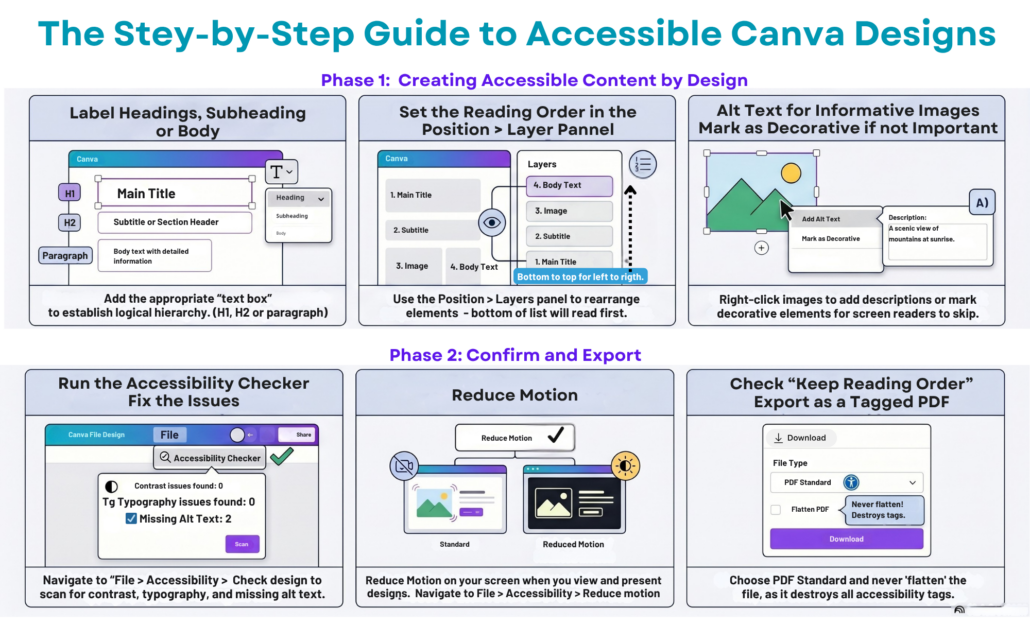
Canva’s Built‑In Accessibility Tools
Are you a power user of Canva, just like me, but worried about creating inclusive and accessible content? Well, worry no more . . .
💡 Did You Know…?
Canva has built‑in accessibility tools?
You can:
- ️🖼️ Add alt text to images for screen readers
- 🎨 Check colour contrast so text is easier to read
- 🔠 Choose clear, readable fonts for all learners
- 🔍 Use the Accessibility Checker to catch issues before sharing
- 💬 Use the Position > Layers option to manually order text so the reading order is correct for text-to-speech and screen readers
- 💥AND so much more
Small tweaks in Canva can make a big difference for student understanding—and they only take a minute or two!
Click on the image below for a downloadable format or the link for a text-based copy of the Accessibility Tools in Canva.
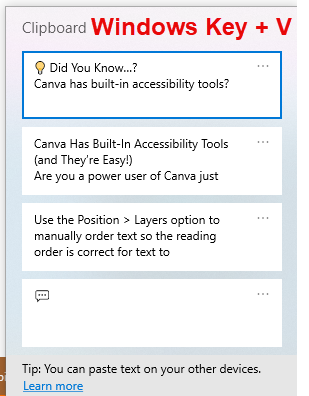
CTRL + V With “Memory”
Have you ever copied something on your computer with the intent to paste it somewhere else, then got distracted and did another task, losing the original “CTRL + C”?
💡 Did You Know…?
🧠 Windows has a “memory” of the items you’ve copied to the “clipboard,” which you can access with the keyboard combo Windows Key + V. It displays a list of the items you’ve copied and lets you choose a specific item to paste.
Welcome back everyone. Hope you all had a relaxing and restorative spring break.
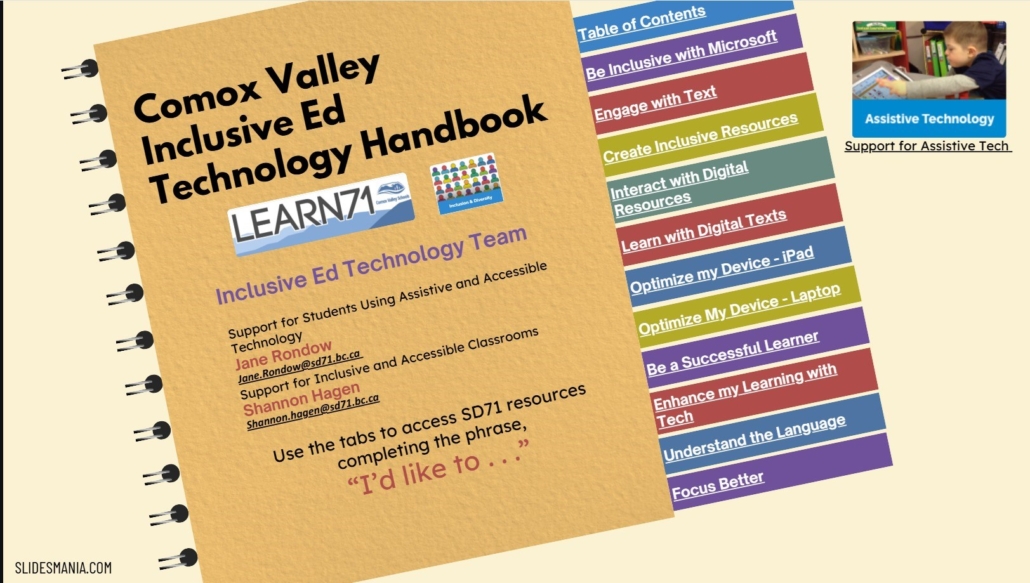
Inclusive Ed Technology Handbook
Today’s Tech Tip highlights something that has been a true work in progress for over a year! In addition to the Teacher Technology Handbook and the Parent Technology Handbook, we’re excited to introduce the Inclusive Ed Technology Handbook, created by Jane Rondow and Shannon Hagen.
This handbook is packed with amazing links and supports designed to help ensure all learners can be successful in the learning environment. Even if you’re not sure which specific resource or tool you’re looking for, the handbook is designed to make it easy—just complete the phrase “I’d like to…” with your Inclusive Ed goal in mind and click on the tab on the right to navigate to the resources.
The handbook is organized by content rather than tools, with clickable tabs that take you directly to what you need. Each section includes a variety of resources (including videos and print resources), links, and tools related to that area of support, making it quick and intuitive to explore.
If you would like to explore any of these tools or resources further, don’t hesitate to reach out to Jane Rondow or Shannon Hagen.
Click on the image below to access the page housing the Handbook (scroll down . . .)
Quick Way to Lock Computer Screen
The next item in today’s tech tip is a simple keyboard combination that allows you to quickly lock your computer screen before you walk away from it. With the increase in awareness in the importance of privacy & security, this is an easy way to ensure nobody but you has access to the information on your computer.
Keyboard Combo to Lock Screen > Windows Key + Letter L
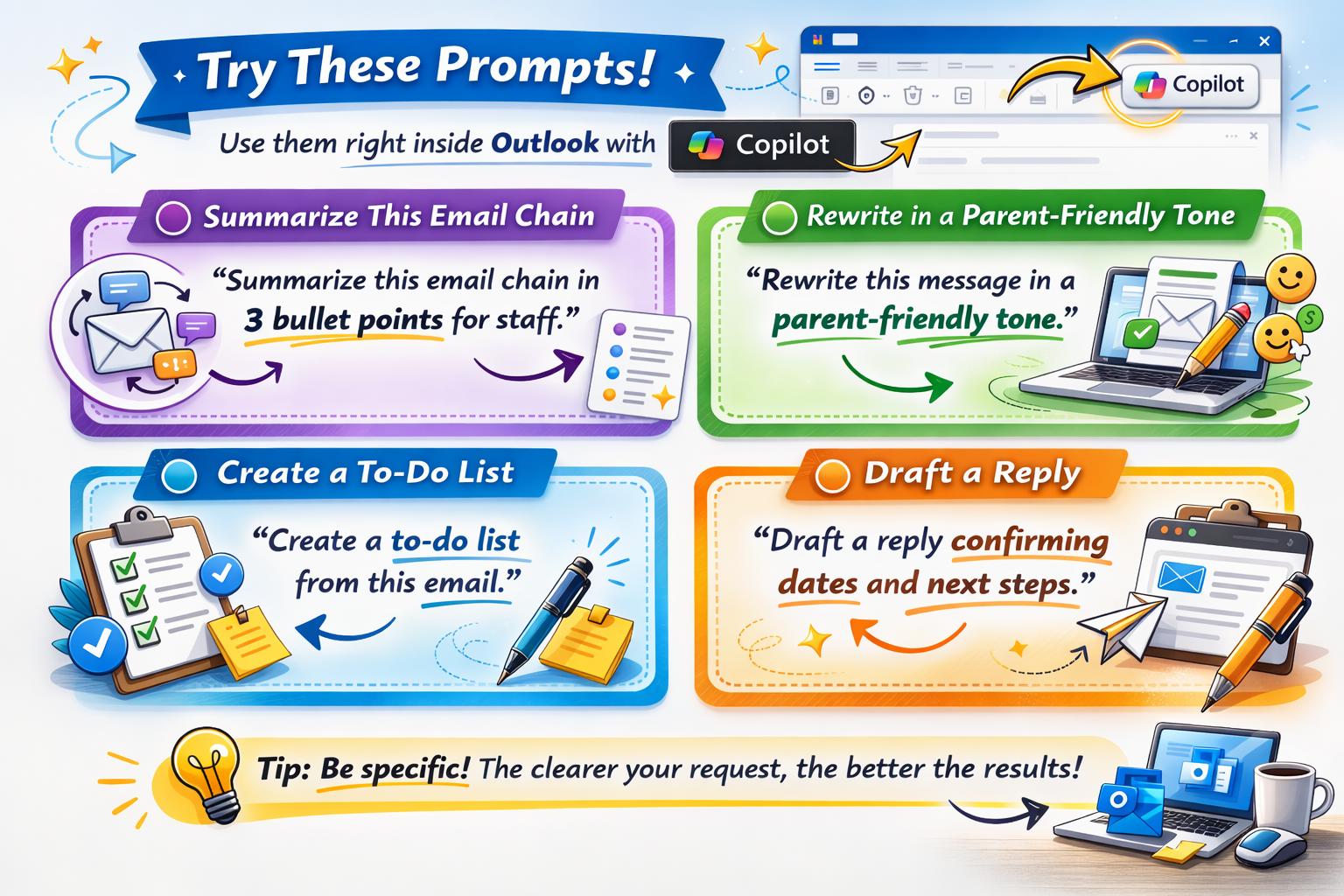
We’re all counting down to Spring Break, and whether you’re flying off to a sunny beach or simply catching up on your sleep and exploring the beautiful Comox Valley we are wishing you the best. This Tech Tip is to help you catch up on all those emails that will be waiting when we get back. I am going to let Copilot in Outlook do the heavy lifting for me now that it is built in to Outlook and I want to share my tricks with you. With a couple of clicks, Copilot can summarize your unread emails, help draft replies and help make that pile seem less overwhelming. Please remember to read everything over before you send it and stick with the 80-20 rule – make sure at least 20% of it is your personal touch. Please avoid using it if you know the email contains personal information about individual students.
How to Use Copilot in Outlook:
1. Find the Copilot button in the top right of Outlook:
2. Click on the email that you would like to work on to select it.
3. Ask Copilot to help with your work. Here are some ideas:
- summarize this email thread
- draft a reply
- change the tone of the reply you are working on
- Find important dates in an email
- organize the information
- make a to do list
- ask copilot to summarize your unread emails (I can select more than one in my Desktop Outlook by pressing CTRL and holding it down while I click on the messages-I can’t seem to get it to work in the online version-let me know if you figure it out.)