
 Tuesday Tech Tip
Grade 4 Password Change Day is Coming!
On October 1st grade 4 students will be required to change their password when they log in to their school district account. We do this to get them away from using the formula we use to generate passwords – this is very easy for other students to figure out and leaves us with cybersecurity problems 😟 This is a great opportunity to help students develop good digital literacy habits by learning how to create strong passwords and keep their personal information safe.
Before the big day, explore with students what makes a good password. Encourage them to create passwords that are long, memorable, and difficult for others to guess. A fun way to do this is by combining several unrelated words into a passphrase!
Here is a handy worksheet you can try: Super Secret Powerful Passwords
Welcome Back!
A Few Tech Things to Know for 2026–27
Tuesday Tech Tip
Welcome back! We hope you had a wonderful summer and that your school year is off to a great start. Shannon, Jane and I are looking forward to another fabulous year of helping you with technology, sharing new ideas, and bringing you helpful shortcuts and resources through our weekly Tuesday Tech Tips.
As everyone gets settled in, we’ve gathered a few tech things worth knowing that might make those first few weeks a little easier. Fair warning, this first Tech Tip is a little more packed than usual! We promise they won’t all be this long 😬.
As always, we’re here to help. Please reach out to us with questions about Information Technology or Inclusive Education Technology (see the end of the message for our email addresses and job specifics). For technical support, you can also contact the IT HelpDesk or submit a Tech Ticket yourself here: SD71 IT Help Desk
…and please write if you have any good ideas for Tech Tips to share!
🔐Need to change a student password?
Remember that you can use Teacher Tools to quickly change student passwords yourself.
Click here for instructions for using Teacher Tools to change your students passwords.
 Don’t forget about My Apps!
My Apps is your launch pad for you and your students for many of our district programs and resources. Sign in once in the Edge Brower and use it to quickly find the programs and apps that you need. It’s also worth taking a minute to organize it so your favourites are easy to find.
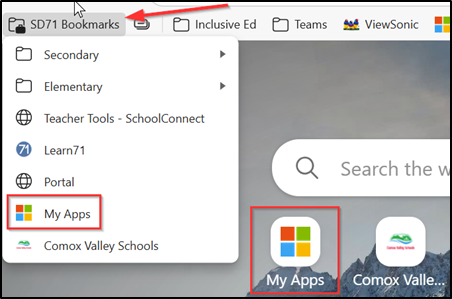
To find My Apps:
You can find a shortcut on the Home page, and the SD71 Bookmarks Folder when using the Edge Browser:
To learn more about My Apps and how to customize it, watch Shannon’s video here:
🪟 Hello, Windows 11!
Some staff are already working in Windows 11, and it will be coming to everyone. Things may look a little different, but most of what you know is still there and there are some great improvements!
Click here to learn more about some of the changes in Windows 11.
 Using a new Team with students? Don’t forget to activate it!
When your new Team is ready for students, click Activate at the top. Until you activate the Team, students won’t be added. This lets you get everything set up first and activate it when you’re ready. If you don’t wish to use the Team, just leave it-it will always be there if you change your mind.
⌨️ Typing Pal has some changes for 2026–27.
If you use Typing Pal with your students, take a quick look at this year’s updates before getting your class started. French Teachers, you no longer have to use Tap Touche! You can change your class from English to French right in the settings for the class! Also check out the new practice words in the MOVE ON section and you can customize the words the kids type to save the monkeys in Monkeys in Jeopardy!
Click here for more information about Typing Pal.
If you are unable to open Typing Pal you may need to be added. Please put a ticket into the Help desk: SD71 IT Help Desk or contact Kara: kara.dawson@sd71.bc.ca
📚 Looking for help?
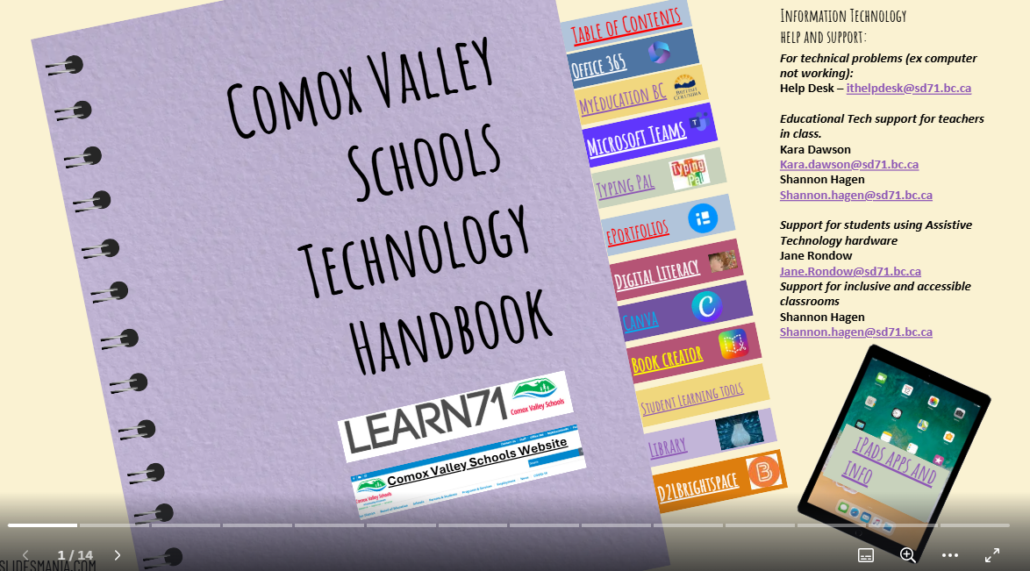
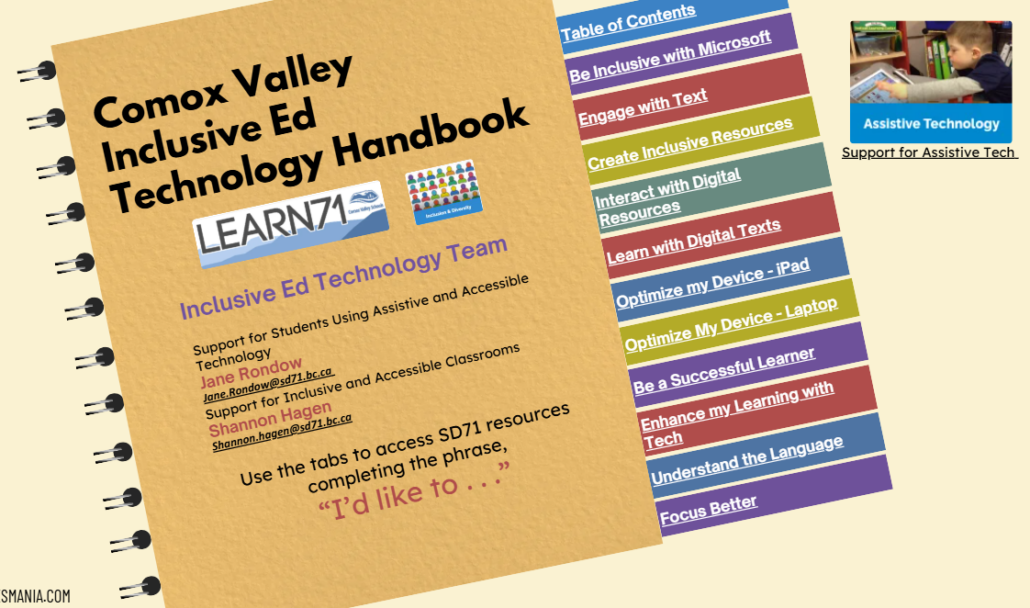
Our previous Teacher Technology Handbook is still available, along with the Parent Handbook and Inclusive Education Handbook, so there are lots of resources to help you find your way-Click on the images to go to the handbooks and scroll down on the page.
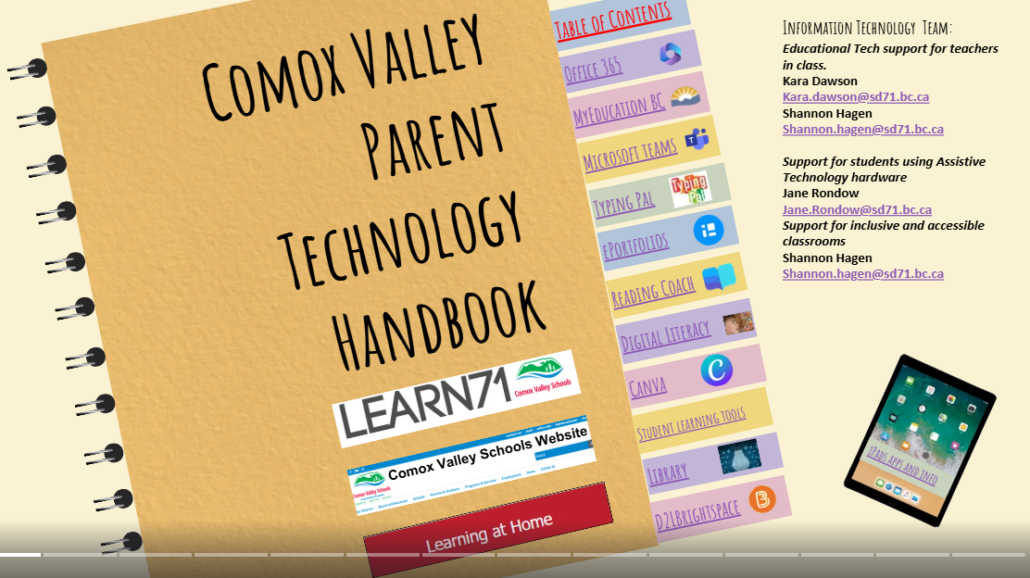
And there’s more coming! 🎉 We are currently completely rebuilding the Teacher Technology Handbook. The new version will be a much more robust guide filled with instructions, resources, programs, tips, and answers to those “Where do I find that again?” questions.
Stay tuned for the new handbook, and have a fantastic start to the 2026–27 school year! 🍎💻
If you have a Teach Tip to share or you would like help with technology please email us:
 J
JAs we head into the final stretch of the school year, energy is low, and to-do lists are long. The good news is you don’t need to spend all day on your computer to get yourself set up digitally for September. Follow each step below and set yourself up for a smoother school start-up.
10 minutes is all it will take 😆😆😆😆
Thanks to Copilot for helping me with some of the suggestions . . .
What to Clean Up on Your Computer Before You Log Off for Summer
⏱️Step 1: Clean Up Your Desktop (2 minutes)
Take a quick look at your desktop or main working folders.
- Delete duplicate or unnecessary files
- Move anything important into clearly labeled folders
- Rename a few key files so they actually make sense later
💡 Use Kara’s Tech Tip from last week to create a “working” and “teaching” desktop
📁 Step 2: Reduce Items in Your Downloads Folder (2 minutes)
Take a quick look at your downloads folder.
- Delete duplicate or unnecessary files
- Sort by name so you can quickly see duplicate files
- Move anything important into the appropriate folder in your OneDrive
- Rename a few key files so they make sense later
💡 You don’t need perfection—just reduce the clutter in this location.
📥 Step 3: Quick Inbox Reset (2 minutes)
No need for “Inbox Zero”—just a quick refresh:
- Delete or archive obvious old threads
- Create a 2025-26 folder to save important emails to visit later
- Flag or pin anything important with “action” items > hover over email and click on flag or pin
- Unsubscribe from emails you don’t read
💡 Even a small cleanup can make September feel less overwhelming.
🔗 Step 4: Fix One Small Frustration (2 minutes)
Think of one thing this year that made you pause or say,
“Why is this so hard to find?”
- Fix a broken link
- Update unclear instructions
- Move a resource to a better location
💡 Small fixes now save repeated frustration later.
🗂️ Step 5: Create a “Start of Year” Folder (1–2 minutes)
Make a simple folder for September with:
- First-day resources
- Welcome materials
- Key links or templates
- School start-up checklist
💡 You don’t have to fill it now—just create the space.
💬 Final Thought
End-of-year is not the time to do everything—it’s the time to do a few small things that make a big difference later.
Have an amazing year-end. 🎉✨🌺🌞