Emotional Supports
I feel…I can…
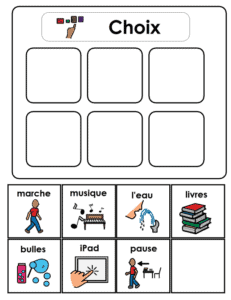
Use this visual support with students to identify the way they are feeling and then to select a choice that will help them calm down, focus or get back on task. “I can” choices can be selected from all self-regulation choices, or they can be customized.
Select from the 4 common feelings listed, or select the blank option to add your own picture/ photo and emotion.
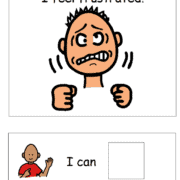
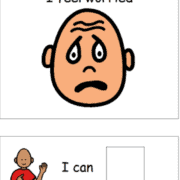
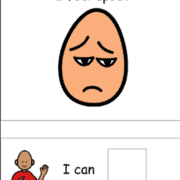
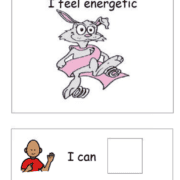
I feel . . . [generic] !
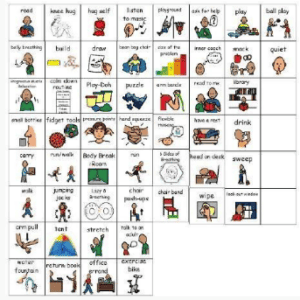
ALL SELF-REGULATION CHOICES
I can……….. (choices)
I Feel . . . Generic Without Pic (.docx)
I Feel . . . Generic With Pic (.docx)
Why am I Upset . . .
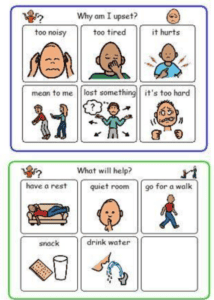
WHY AM I UPSET . . . WHAT WILL HELP
Click on the “+” icon to expand the accordion to access the downloadable files.
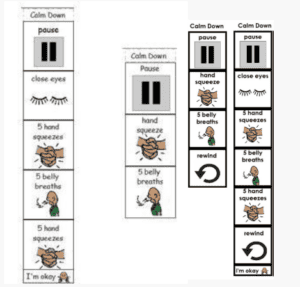
Calm Down Scripts
- 2x2_3_step_Calm_Down_script
- 2x2_5_step_Calm_Down_script
- 2x2_4_step_Calm_Down_Rewind-bot_script
- 2x2_4_step_Calm_Down_Try again-bt_script
- 2x2_6_step_Calm_Down_Rewind-bt_script
- 2x2_6_step_Calm_Down_try again-bt_script
- 8x10_3_step_Calm_Down_script
- 8x10_3_step_Calm_Down_script
- 8x10_5_step_Calm_Down_script
- 1x1_3and5_step_Calm_Down_scripts
- 1x1_4_and_6_step_Calm_Down_Try again_scripts
- 1x1_4_and_6_step_Calm_Down_rewind_scripts
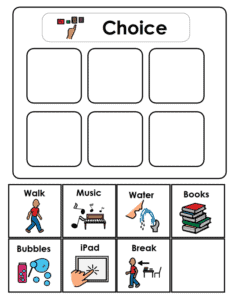
Break Cards
All Breaks
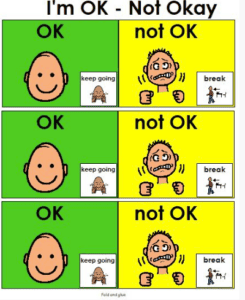
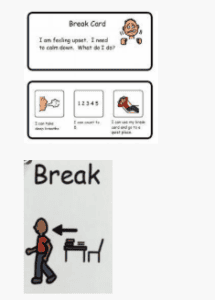 Used to prompt for the need to take a break.
6×4 Customized break card w/ 3 choices
6x4_Template break card
2x2_Break_full_sheet
4x4_Break_full_sheet
BreakCard_no_pic
BreakCard_no_pic
1x1_Break_full_sheet
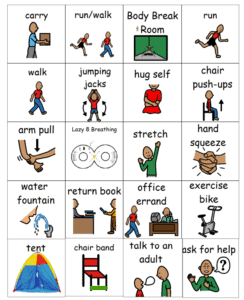
Review tool options and decide which are best suited to your student. Tools that provide physical activity, belly breathing, quality time with a trusted adult, and creative expression will alleviate stress. Some tools can be used anywhere and at any time. Other tools will require your student to leave the classroom.
2x2_all_break_choices
4x4_all_break_choices
1x1_all_break_choices
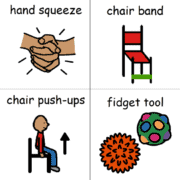

Display these at the front of the class or on a student’s desk after explaining and practicing each activity. Use them to prompt students to engage in independent self-regulation activities.
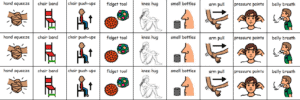
Tape this strip to each student’s desk to provide a visual reminder of self-regulatory body tools that can be used while working.
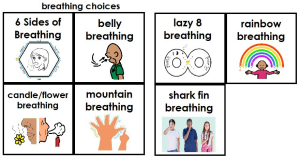
Belly breathing is a tool for the body that promotes activation of the calming response (via the parasympathetic nervous system.) Practice belly breathing with both hands over the navel to be sure the diaphragm is moving with each breath. The belly should expand with each inhalation and collapse with each exhalation.


Use this visual to remind your student of some thinking tools they can use for self-regulation. Thinking tools are proactive, supporting a students self regulation before they become upset. Be sure to explicitly teach and practice each strategy when a student is happy, relaxed, and engaged.
To teach/implement the size of the problem (a mind tool), refer to Zones of Regulation Curriculum pages 122-126.
0-5 Scale

This scale is a tool for the mind.
Use this 0-5 scale with a student who struggles to identify/manage frustration/anger. First, discuss what each level feels/looks like, then use the scale as a visual prompt to identify the student’s level.
2x7_0-5_scale
ZONES Tools

Level 1 & 2
I Feel I Can
Use this visual support with the Zones of Regulation program. Select from All Self-Regulation Tools (#8) for the I Can column, or draw/list regulation tools with a wipe-off marker.
Zones_Tools_Level_1 and 2
3 Point Scale

Looks like, Feels like, I can try to
Use this 3‑point scale to help students notice their signs of nervous system elevation. Identify what each level looks and feels like, then list helpful strategies.
3_point_scale
5 Point Scale

Looks like, Feels like, I can try to (fillable)
Use this 5‑point scale to help students notice their patterns of nervous system elevation. Work with them to identify what each level looks and feels like, then add helpful strategies in the I can try column.
5 Pt. Zone Colours

I feel | I can
Use this 5-point scale mind tool to help your student understand his/her usual pattern of nervous system arousal (i.e. elevation) and follow through with self-regulation tools.
Zones_I_feel_I_can_visual
Where am I?

Zones check in
Customize this Zones of Regulation visual with your student’s most frequent blue, green, yellow, and red zone feelings by printing I Feel Images
Where_am_I_Zones_for_desk
Self Regulation

Key Ring – Zones check in
This key ring can help students identify their zones and choose self-regulation tools.
Self_Reg_Choice_(I_can)
Graduated ZONES Supports


Use these simplified Zones of Regulation visuals to teach your students to identify their zones and choose/use effective self-regulation tools. These visuals were designed for students who are just beginning to identify feelings.
First, introduce only the green zone with ‘happy’ in the I feel column. Choose one or two tools for the I can column that help your student stay in the green zone. Once your student is able to identify when they’re happy and use their green zone tool(s), introduce the blue zone with ‘sad’ as the feeling (using the green/blue visual). Once your student is able to identify and differentiate happy/sad and use effective coping tools for these two zones, introduce the yellow zone, choosing whichever yellow zone feeling occurs most frequently for your student. Introduce the red zone in the same way.
Count Down and Token Strips
Token strips help children see their progress by earning tokens for positive behaviours. When they fill the strip, they get a reward they chose. Adults give lots of praise, never take tokens away, and make sure the reward is something the child really wants. Over time, the token system is slowly reduced as the child learns the behaviour.